Hardware disease happens when a cow swallows a sharp piece of metal that pierces the wall of the reticulum. In post-mortems in Flanders, 71.4% of cases were caused by metal from worn tyres (DGZ Vlaanderen). You prevent it with a clean field and yard, a clean magnet, well-maintained machinery and a silage pit without tyres.
Part of the guideSilage feed-out rate: how many metres per week?
of cases of hardware disease found at post-mortem in Flanders could be traced back to metal from worn tyres
DGZ Vlaanderen, Veepeiler study 2023dead and injured cows per year in the Netherlands
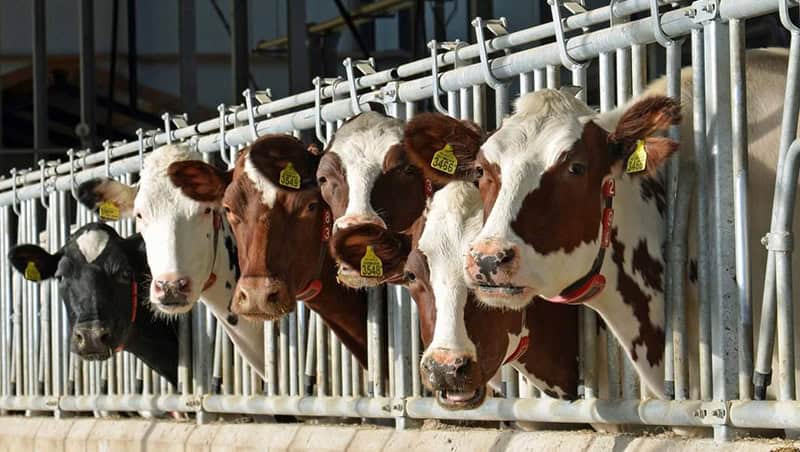
WUR (EenVandaag 2018)Every year, hardware disease costs many cows their health or even their lives. According to Wageningen University & Research (WUR), in the Netherlands alone it involves about 4,000 dead and 12,000 injured cows a year. The cause is almost always a piece of metal that gets into the cow through the feed. With a few fixed habits, you keep that metal out of your feed.
Hardware disease (traumatic reticuloperitonitis) happens when a sharp metal object gets into the cow's reticulum. Because of the way this stomach contracts, the object can pierce a hole in the stomach wall.
In mild cases, the cow eats less for a while and milk production drops. In severe cases, the outcome is usually fatal. Then, as well as the stomach wall, the pericardium, liver, lungs or diaphragm are damaged.
The metal mainly comes in through the feed: litter in the grass, parts that come loose from machinery, rubbish in the yard and steel wire from old tyres on the silage pit.
Yes. Tyres have steel wire woven into them. As a tyre slowly breaks down, that wire comes loose and can end up in your silage. In post-mortems in Flanders (Belgium), 71.4% of hardware disease cases could be traced back to metal from worn tyres (DGZ Vlaanderen, the Flemish animal health service).
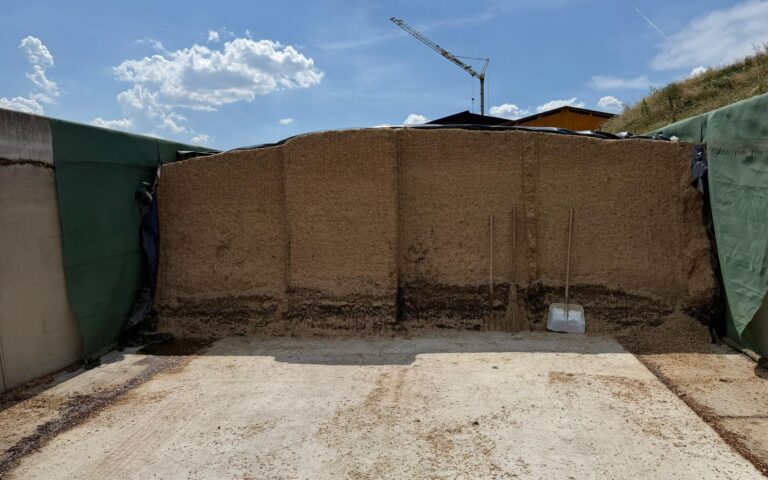
If you cover your silage without tyres, you reduce the risk of steel wire from tyres in the feed. With Silage Safe, covers with tensioning straps hold the plastic in place. See how that works on our product information page.
When feeding out, all the feed passes through your hands once more. When you open a section, check whether there are remains of tyres, wire or other waste on or in the silage, and remove it before it goes into the diet feeder. How many metres a week to feed out is explained in silage feed-out rate.
A well-covered pit also keeps out other trouble, such as pests at your silage pit. More about covering well is in covering a silage pit.
Would you like to look at how to reduce the risk of hardware disease on your farm together with us? Get in touch.
Not sure about your silage?
We are happy to help.
No. A magnet only picks up magnetic metal. Aluminium cans, for example, it doesn't. A full magnet also works less well, so clean it regularly.
Call your vet. They can assess what is going on and what the best treatment is.
Updated on 5 November 2026.