
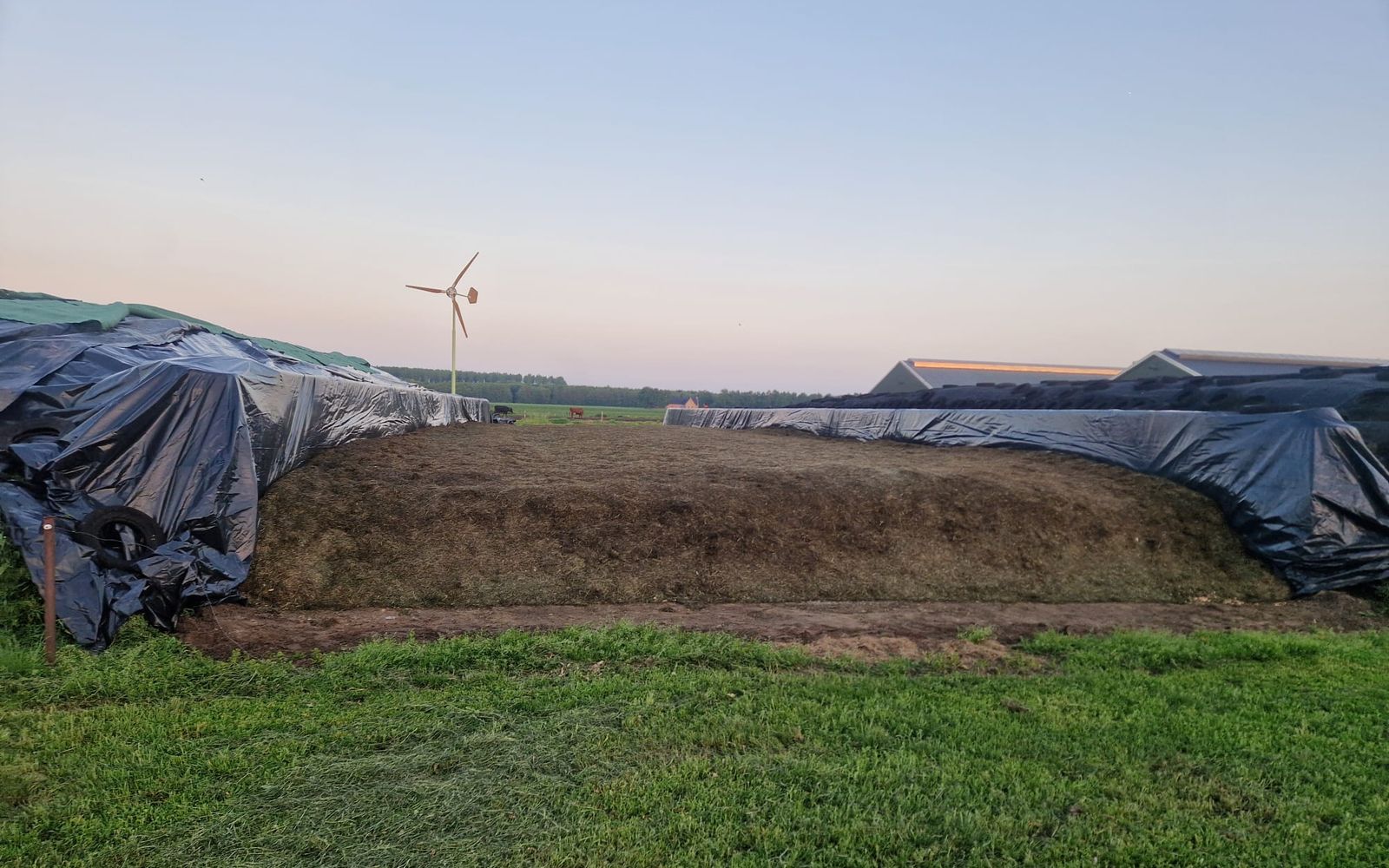
Choose new silage plastic with low air permeability, enough thickness and UV stability for as long as your pit stays closed. Put underlay film under it: it clings to the silage, and an oxygen barrier film lets much less air through. Side-wall plastic, or plastic laid over the wall down to the floor, keeps water out along the walls.
with Silage Safe, leave at least this much silage plastic on the floor so rainwater can't run into the silage
Silage Safe, manual in the brochure 2026UV stability of most silage films
Silage Safewidth of silage plastic for a pit 8 m wide with silage 2 m high
Silage SafeA small hole in the plastic, or a wall where water runs in: you only see it months later, when you find warm and mouldy patches while feeding out. Which plastic you choose and how you lay it largely decides how airtight and watertight your silage will be. If the plastic isn't right, air and water reach the silage, and that is where spoilage starts.
Silage plastic is never completely airtight. There are big differences between types. Look at these four things:
That depends on the type of plastic. There is no single thickness that is best for every pit. As well as thickness, look at the number of layers and the air permeability. Together they decide how much air gets through and how well the plastic resists punctures and tears. In general, thin plastic lets more air through than thick plastic of the same material. So compare the air permeability on the product sheet as well as the microns.
Underlay film is a thin film that you lay directly on the silage, under the silage plastic. Because it is so thin, it follows the surface of the silage more closely. It more or less clings to the silage. The silage plastic on top is thicker and protects against punctures, tears and sunlight.
Do check which underlay film you choose. Ordinary underlay film mainly makes sure less air stays between the plastic and the silage. An underlay film with an oxygen barrier (oxygen barrier film) also lets much less air through than ordinary silage plastic.
What this gives you:
Always pull the underlay film over the full width of the silage. The edges of the underlay film are often a weak point. Air collects there and condensation with a higher pH drips into the silage.
When covering, you mainly pay attention to the top and the ends of the pit. But water can also get in along the sides. In practice, silage pit walls are often not completely watertight: the sealant joints are often worn after one or two seasons. Then water leaks in along the walls.
That is why you lay side-wall plastic, or lay the silage plastic itself over the wall. Pull it down to the floor and leave a good length lying on the floor, so rainwater can't run into the silage. This also works while the silage is still below the top of the wall.
Without side-wall plastic, rainwater soaks into the silage unnoticed, and that raises the pH. As long as the pit is airtight, the damage is limited. But when you feed out, heating and spoilage spread faster. So check your walls before ensiling too, as part of preparing your silage pit.
Add the silage height to the width of the pit. For a pit 8 metres wide with silage 2 metres high, take plastic 10 metres wide. Then you can lay the plastic over both walls down to the floor, you don't need separate side-wall plastic and there is a double layer everywhere.
We recommend working with an underlay film and two large sheets of silage plastic. This is how you put it in place:
Now there is an underlay film and a double layer of silage plastic over the whole pit. That is at least 3 layers of plastic everywhere. Then carry on covering as in covering a silage pit: step by step. If it is very windy, see covering silage in strong wind.
If you put a covering system on top, the plastic also stays tight. Geert Mulder from Balkbrug: "Wind is much less of a hassle now. As soon as we secure a row of covers, the plastic stays put." See how the Silage Safe system works on our product information page.
No. Old plastic always holds traces of soil, silage and water, and with them you bring a lot of bacteria and moulds into your silage. It often has small holes already, and part of its UV stability is used up. It looks like a saving, but you lose more feed because of it. You can work out what that costs with calculating silage losses. Where else mould comes from is covered in the 4 causes of mould in silage.
 From the farm
“If you see it like this, you also see that the roughage is tightly covered, especially at the shoulders.”Bouwman, Den Andel (Netherlands) · read the story
Not sure about your silage?
We are happy to help.
Silage under black plastic warms up faster than under light plastic. If there are covers on top of the plastic, the colour makes little difference.
That depends on the size, the thickness, the number of layers and whether you choose film with an oxygen barrier. Ask your supplier for the current price. Also take into account what cheap plastic can cost you in feed later.
That differs by region. Ask your local authority, your supplier or a farm plastics recycling scheme how used silage plastic is collected in your area and what it has to meet.
Updated on 5 November 2026.
 Covering & protectingProblem & solution
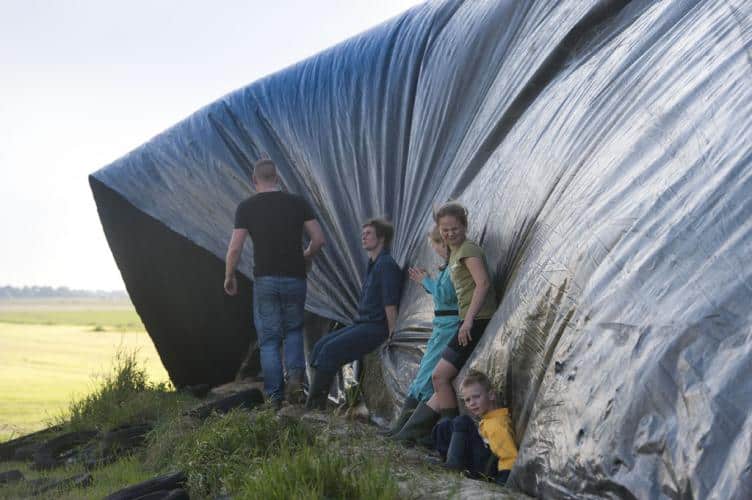
If the plastic blows loose in a storm, put it back quickly and hold it down with weight or covers, starting on…
Grass · Maize5 min read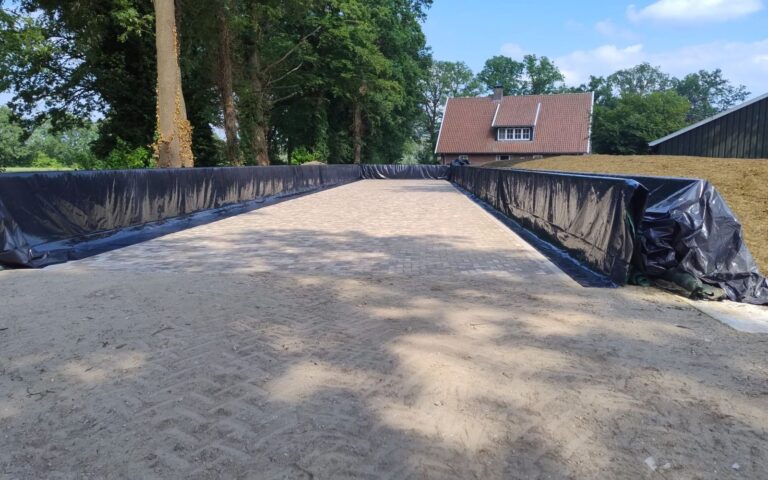 Covering & protectingTips
Prepare your silage pit well before ensiling. Clean and dry the pit and the access route, mow around it and make sure…
Grass · Maize6 min read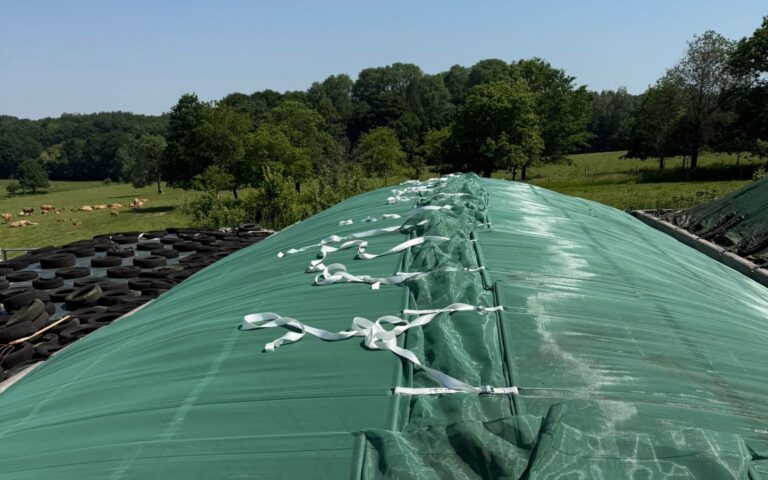 Covering & protectingTips
You prevent pests at your silage pit by taking away food, water and hiding places. Clear up silage residue straight away, mow…
Grass · Maize4 min read