First cut silage: tips from mowing to covering

Ensiling & compactionGrassBefore harvestEnsiling
By Silage Safe · updated on 5 November 2026 · 5 min read
In this article
Short answer

First cut silage starts with working clean: a clean pit, maintained machines and a stubble of 6 to 7 cm. Ensile at a cool time of day, not too dry, and roll well. Then seal straight away. In a field trial with bales, more than 6% of the dry matter was lost after 2.5 hours of waiting (Groeikracht, Veeteelt 2021).

Part of the guideMaking and preserving silage: the complete guide

6-7 cm

stubble height when mowing, higher on uneven fields (WUR gives 5-6 cm)

Silage Safe and WUR Handboek Melkveehouderij
15 tonnes

weight on the pit when 30 tonnes come in per hour

Silage Safe
1.5 m

minimum feed-out rate per week, at least 2 m in summer

Silage Safe

What you get wrong in the first cut, you feed for the rest of the year. The two most important things: keep dirt out of the silage and keep the temperature low.

When do you mow the first cut?

That depends on your ration, the weather and how well your fields carry machinery. Only mow when the ground will carry the machinery and you have a few dry days to wilt. After a few sunny days there is more sugar in the grass, and you need that sugar for good fermentation. Why it makes so much difference is in sugar content of grass.

What do you do before ensiling the first cut?

  1. Work clean. Make sure you have a clean silage pit and access route, clean machines and new silage plastic. Any dirt still lying in the pit or brought in by the machines adds extra butyric acid bacteria and moulds to your silage. What to look out for is in preparing your silage pit.
  2. Maintain your machines. That way you prevent blades, tines or bolts from coming loose and ending up in the silage. If the mower or the feed mixer grinds them up, they splinter and can cause hardware disease. Some machines have a magnet or detector, but if it is full or dirty, it no longer picks up new metal parts properly.
  3. Mow at 6 to 7 cm, and even higher on uneven fields. WUR gives a stubble height of 5 to 6 cm. If you mow lower, more soil and manure residues end up in your grass silage. That brings in more butyric acid bacteria and lowers palatability and feed value. A slightly higher cutting height also gives faster regrowth.
  4. Decide your silage height in advance. Choose a height at which you will later be able to feed out at least 1.5 metres a week.

How do you ensile the first cut well?

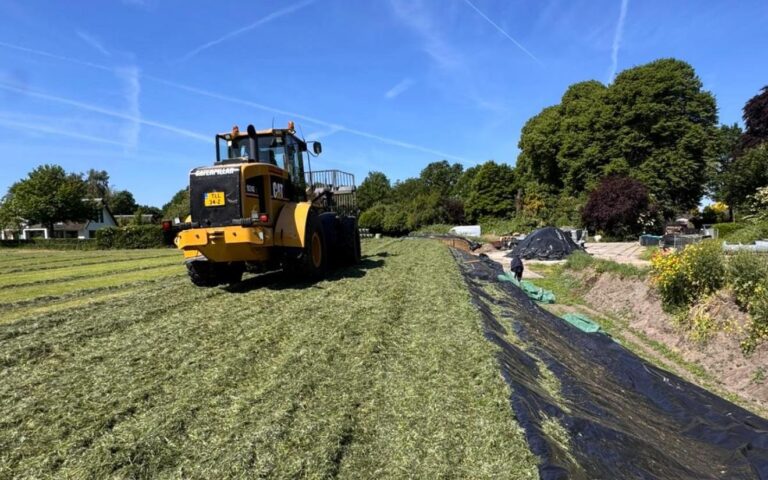
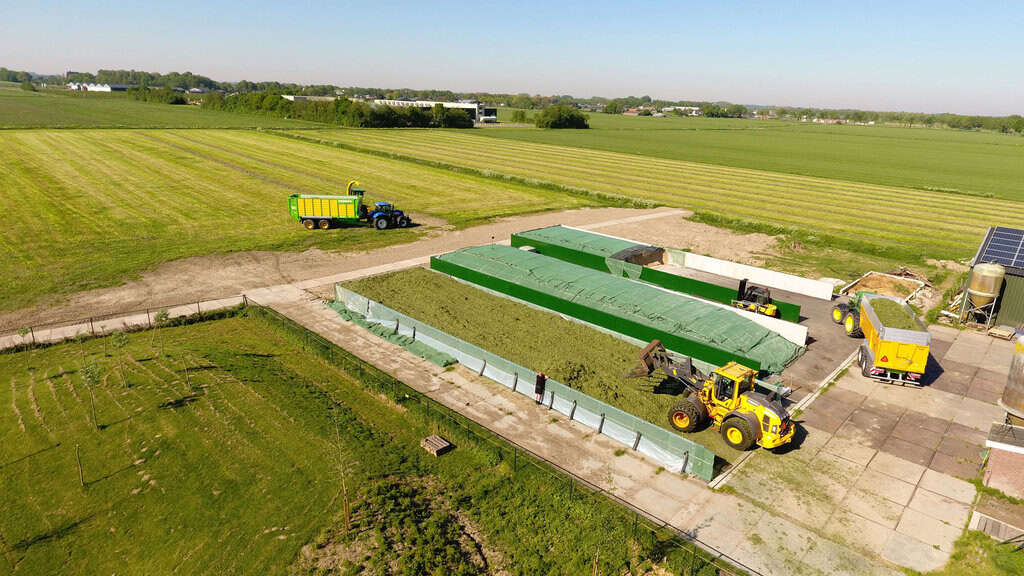
  1. Ensile at a cool time of day. That keeps the temperature in the pit as low as possible.
  2. Roll well. Ideally, put a weight of half the hourly intake on the pit. If 30 tonnes come in per hour, roll with 15 tonnes.
  3. Don't use extra-wide tyres and keep enough air in the tyres. With a smaller tyre contact area, you put more pressure on each square centimetre.
  4. Avoid wheel ruts. Above a rut, there is a little extra space after covering, where oxygen collects. And next to the rut, the silage is less well compacted.
  5. Don't ensile too dry. Dry grass is hard to compact. If you do have dry grass, have it chopped more finely so that it is less stemmy.
  6. Put the driest grass and the poorest fields into the pit first. That grass is the most vulnerable. At the bottom it gets the highest compaction, so the risk of oxygen, and therefore spoilage, is smallest.

More on rolling is in the 6 tips for good compaction.

How do you cover the first-cut grass silage?

  1. Cover quickly. Then lactic acid bacteria get to work as soon as possible to bring the pH down. That holds back moulds and other bacteria. Waiting costs feed: in a field trial with bales by Groeikracht, a Dutch silage advisory group, more than 6% of the dry matter was lost after 2.5 hours and almost 10% after 5 hours (Veeteelt, May 2021).
  2. Seal airtight and watertight. If the walls of your pit aren't watertight, use plastic there as well.
  3. Preferably use underlay film, across the full width of the pit. At the edge of the film, condensation drips into the silage. The pH rises there and a weak spot develops.
  4. Don't use car tyres. They aren't heavy and spread their weight over quite a large area. On top of that, steel wire from the tyres can end up in the feed, and that is dangerous for your cows. This is how you prevent hardware disease.

More tips for covering: covering grass silage.

What do you look out for after ensiling?

  1. Don't open the pit within 6 weeks. Before then, the pH hasn't dropped far enough. If oxygen gets in again, harmful bacteria and moulds get another chance.
  2. Feed out at least 1.5 metres a week, and at least 2 metres in summer. If your pit is in the sun or the weather is warm, feed out even faster. That prevents the silage from warming up too quickly and starting to heat.

How do you work with Silage Safe at first cut?

  1. Hang the covers in place with the hems on the wall side. Then the straps and buckles end up on top when you cover the pit.
  2. Leave at least 20 cm of plastic on the floor. That way rainwater runs away through the drainage pipes and doesn't get into the silage.
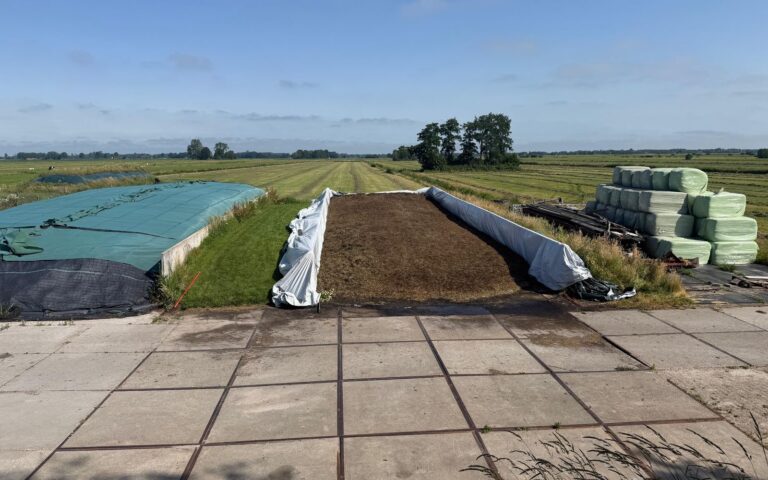
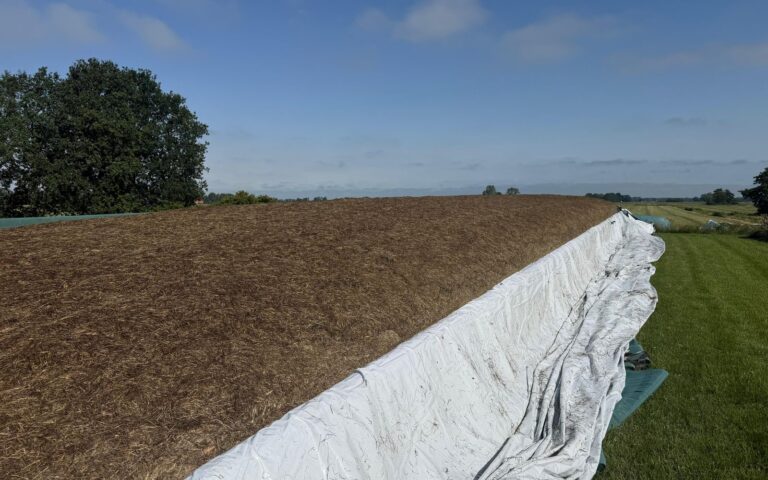
  3. Give the silage a rounded top, right from the start. Then there is no room for oxygen anywhere and there is tension on the covers everywhere. Don't wait until the last loads.

If you add another cut on top of the first one later, you release the covers and then quickly cover the pit again. "After opening and adding the next cut, we can now cover the pit within an hour," says Remco Fuite from Genemuiden. You can find more instructions in the instruction video. You can also see how the system works on our product information page.
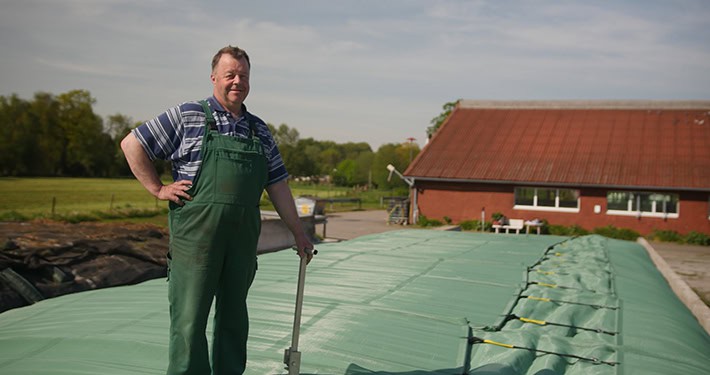
From the farm
“When I open the silo, I notice that the quality of the feed is really excellent.”
Hermann TenBerge, Gronau (Germany) · read the story

Not sure about your silage?
We are happy to help.

Contact us

Frequently asked questions

How high do you mow the first cut?

At 6 to 7 cm, and higher on uneven fields. WUR gives a stubble height of 5 to 6 cm. If you mow higher, you take in less soil and manure and the grass grows back faster.

Can I put the second cut on top of the first cut?

Yes. You can add another cut on top of the existing silage, as long as you seal the first cut well in between, airtight and watertight, so no air or water reaches the feed until you ensile the next layer.

How long should grass silage stay closed?

At least 6 weeks. By then the pH has dropped far enough to keep the feed stable when you open the pit.