
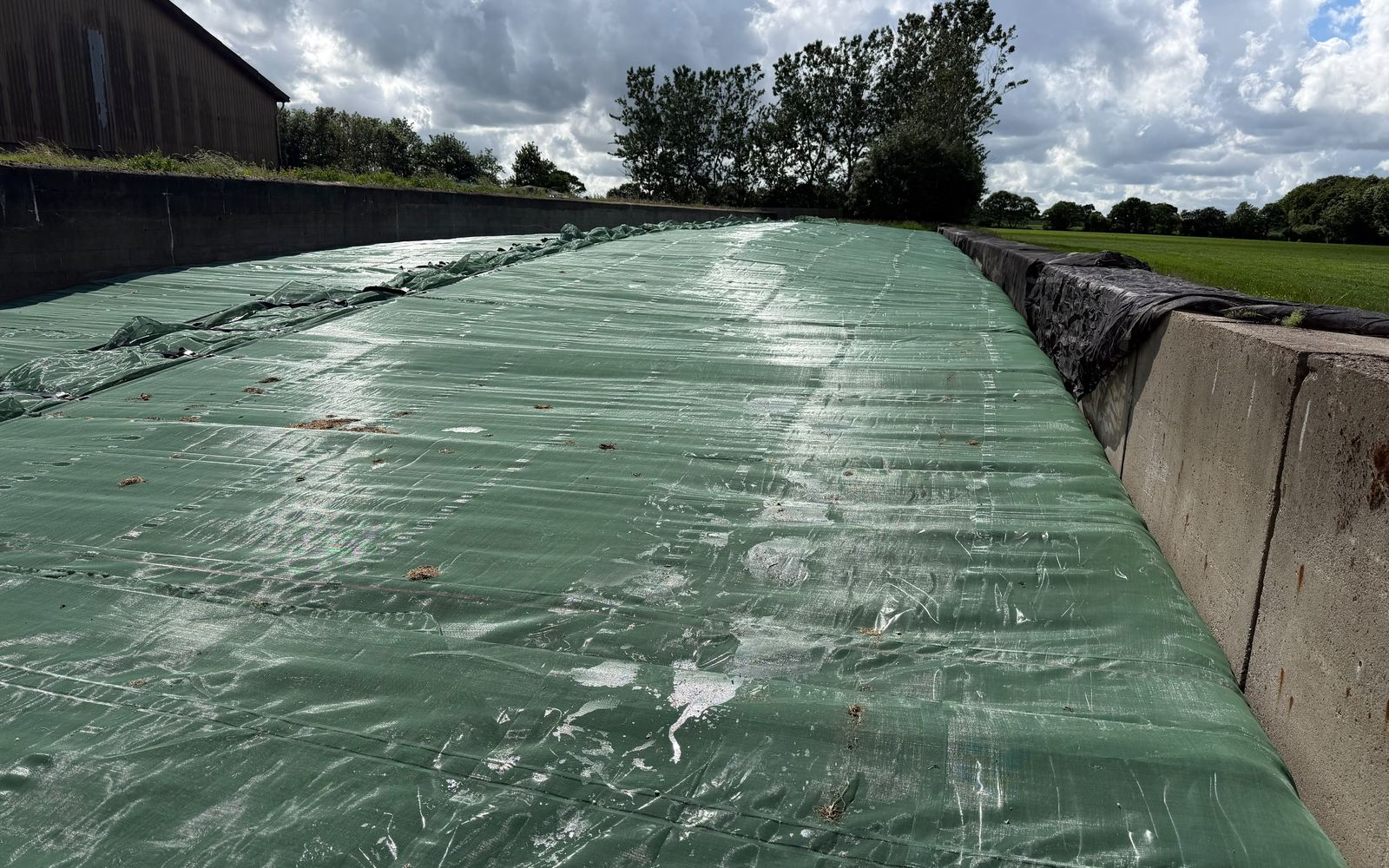
Water in silage usually gets in as rainwater along the walls, through puddles or through holes in the plastic. Wet grass silage should drop to a pH of 3.8 to 4.2 (WUR). Rainwater is much less acidic and slows that fermentation, giving butyric acid bacteria, moulds and yeasts a chance. Watertight covering and good drainage prevent it.
the pH of well-fermented wet grass silage; drier silage can be higher
WUR, Handboek Melkveehouderijwith a shared dividing wall, water can only go one way: into the silage
Silage Safe, brochure 2026additional feed value can easily be lost through heating
Silage Safe, brochure 2026 (Eurofins Agro)Rainwater that runs down the wall into your silage raises the pH at that spot. That gives yeasts and moulds a chance, and you lose feed value in what your cows eat. On its way in, the water also carries dirt with it. Watertight covering and good drainage keep it out.
After ensiling, lactic acid bacteria lower the pH of your silage. The silage becomes acidic, so other bacteria, moulds and yeasts struggle to develop. For silage with less than 25% dry matter, a pH of 3.8 to 4.2 is good. Drier silage can be higher: up to about 4.6 at 35% dry matter and up to about 5.0 at 45% (WUR dairy farming handbook).
Rainwater is much less acidic than good silage. If it runs into your silage, the pH goes up at that spot. Butyric acid bacteria, moulds and yeasts get a new chance and the feed value drops. That silage is also less palatable, so your cows eat less of it. How fermentation works is explained in what happens in your silage after ensiling.
The water that falls from the sky may be clean, but on its way to your silage it picks up all sorts of things: soil, old silage and animal droppings. That brings butyric acid bacteria, other harmful bacteria and pathogens into your silage. The result is lower feed value, less palatable feed and a higher risk of disease in your animals. Read more about the effects in butyric acid in silage.
Where water gets in, yeasts and moulds get their chance. You often see this as heating, especially along the walls. Heating can easily cost an additional 10% of feed value (Silage Safe, brochure 2026, based on Eurofins Agro). How to tackle heating is explained in preventing heating in silage.
Water always finds the lowest route. In a silage pit, these are the usual places:
Good drainage is the basis for keeping water out of your silage. It involves two things:
The trickiest spot is the wall. Rainwater runs down the wall and looks for a way in there. With a shared dividing wall between two pits, the water can only go one way: into the silage. That is why the water has to be caught between the wall and the plastic and carried out of the pit. See how the Silage Safe drainage pipes do this on our product information page.
A drainage system only works if it is well designed and properly installed. Maintain it as well: clear any blockages so the water can keep flowing.
Ideally, keep rainwater and silage effluent separate. Clean rainwater can then be drained away separately from the effluent from your silage. Ask your local authority or water authority which rules apply to draining effluent and water from your silage base.
You see the difference mostly at the bottom of the pit and along the walls, where the wettest silage would otherwise be. You can work out what spoilage costs you each year with calculating silage losses.
Not sure about your silage?
We are happy to help.
Yes, even a little water can raise the pH locally. Butyric acid bacteria, moulds and yeasts then get a chance at that spot. You often see it as a wet, spoiled strip along the wall.
Usually, water runs down along the walls and can't drain away. It stays at the bottom and soaks into the silage. Good drainage at the bottom of the pit and a cover that seals at the edges prevent this.
There is always some condensation. Lay the underlay film across the full width of the pit, so the condensation ends up beside the silage and doesn't run into it at the edge. Roll the silage evenly and make the top slightly rounded, so the water runs off.
Ideally, keep them separate, so clean rainwater can be drained away on its own. There are rules for draining silage effluent. Check them with your local authority or water authority.
Updated on 5 November 2026.
We use technologies such as cookies to store and/or access information on your device. We do this to give you the best experience and to show personalised and non-personalised ads. If you consent to these technologies, we may process data such as browsing behaviour or unique IDs on this site. Not consenting or withdrawing consent may affect certain features and functions.
