
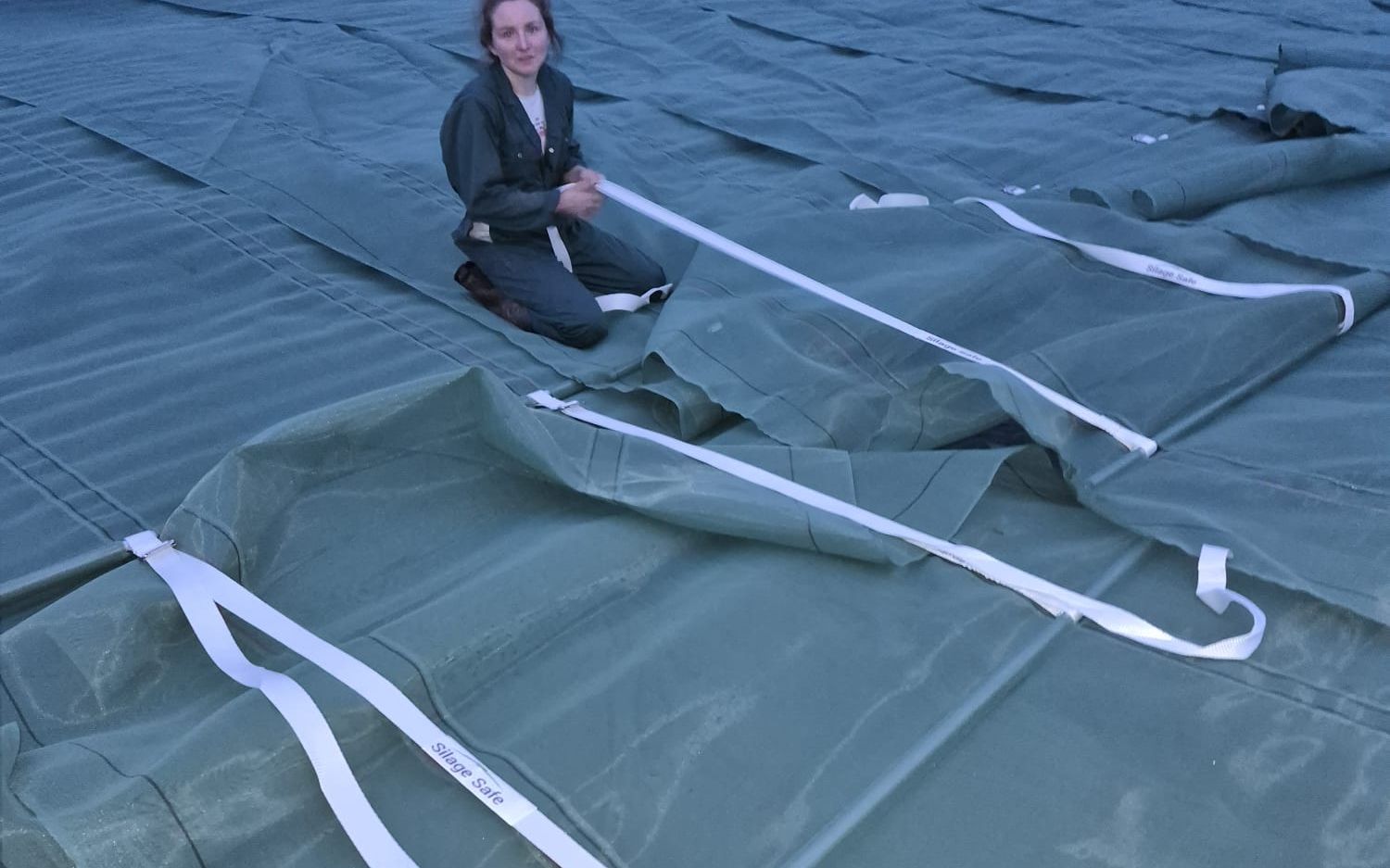
Cover grass silage straight after rolling. In a field trial with bales, every hour of waiting cost about 1.5% dry matter; after 5 hours almost 10% was lost (Veeteelt, 2021). Lay underlay film over the full width, seal the edges tightly and keep rainwater out. Keep the pit closed for at least 6 weeks.
dry matter lost for every hour the pit stays open after rolling (field trial with bales)
Groeikracht, Veeteelt May 2021dry matter lost when sealing was delayed by 5 hours; the feed value was also clearly lower (field trial with bales)
Groeikracht, Veeteelt May 2021dry matter to aim for when ensiling grass
Groeikracht, VeeteeltGRAS March 2025After a long day of mowing and ensiling, the grass silage is in the pit. How quickly and how tightly you seal it shows up in your feed for the rest of the year. Grass is only well preserved once the pit is airtight and watertight, and fast. In practice it often goes wrong at the edges, in the rain and when you add several cuts on top of each other.
A tight cover starts in the field and in the pit.
All tips for spring are in first cut silage tips.
Straight after rolling the last layer. Don't leave the pit open overnight. After rolling, there is still oxygen in the grass. Only once it is used up does fermentation get going.
A field trial by Groeikracht showed how much difference it makes (Veeteelt, May 2021). Bales of chopped grass were wrapped at different times, to imitate a silage pit. Every hour the grass silage stays open costs about 1.5% dry matter. After waiting 2.5 hours, the dry matter loss was already over 6%. After 5 hours it was almost 10%, and the feed value was clearly lower than that of grass wrapped straight away.
So ensile at a cool time of day if you can, and have your covering materials ready.
Work with enough people, but let one person take charge. The full step-by-step plan is in the guide covering a silage pit.
Along the wall the grass is hardest to compact. So that is where most air is. Most air also gets in at the sides. Tyres and soil don't stay in place well on the edges. So use a cover that gives pressure right at the wall, and don't drive extra runs right next to the edge: that leaves ruts with air pockets.
Jarne Schuiling from Vries (NL) notices the difference in his grass silage: "With Silage Safe we have little to no losses now. We can now retain much more of the protein in our grass silage." Read his experience with Silage Safe.
Rainwater is much less acidic than good silage. If it runs into the silage, the pH rises and butyric acid bacteria, moulds and yeasts get another chance. Rainwater also carries soil, old silage residue and manure with it.
All measures against rainwater in silage are in a separate article.
When you add cuts on top of each other, the pit holds several layers of grass. When feeding out you cut through all the layers, so your cows get a more even ration. But the pit is opened more often and so gets air more often. Farmers who cover with tyres or soil often cover less carefully between two cuts to save work. That is exactly when heating starts.
With Silage Safe the plastic and the covers stay hanging at the wall. You release the covers, bring in the new cut and then cover it again quickly. Bart Cornelis from Aalter (BE): "When adding another cut of silage, you can quickly open the pit and cover it again." See how it works on the product information page.
Keep the pit closed for at least 6 weeks. By then the pH has dropped far enough and the silage is stable. If you open it earlier, yeasts and moulds get another chance with the new oxygen. When you add another cut, you do open the top earlier, but you don't feed from the pit yet.
Match the height of the silage to your feed-out rate when you fill the pit: at least 1.5 metres per week in winter and at least 2 metres per week in summer. If your silage face gets the sun, feed out even faster.
 From the farm
“The cloths are already prepared, so you just have to lay them over the wall, and when closing, you pull it back over the clamp.”Schep, Lemmer (Netherlands) · read the story
Not sure about your silage?
We are happy to help.
Yes. Tyres only give pressure in one spot, don't stay in place well on the edges and attract pests. A covering system with covers and straps holds the plastic in place without tyres.
Have everything ready for covering and cover as soon as the last layer has been rolled. A wet top layer under the plastic ferments more slowly. Also keep the side-wall plastic and drainage in order, so water doesn't run into the silage along the wall.
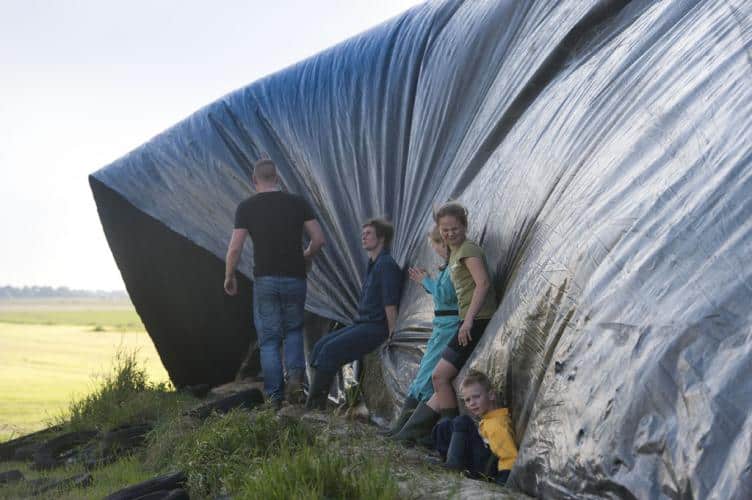
Lay the plastic over the walls in advance, start on the windward side and hold the plastic down straight away with weight or a row of covers. All the steps are in the article on covering silage in strong wind.
Updated on 5 November 2026.
 Covering & protectingProblem & solution
If the plastic blows loose in a storm, put it back quickly and hold it down with weight or covers, starting on…
Grass · Maize5 min read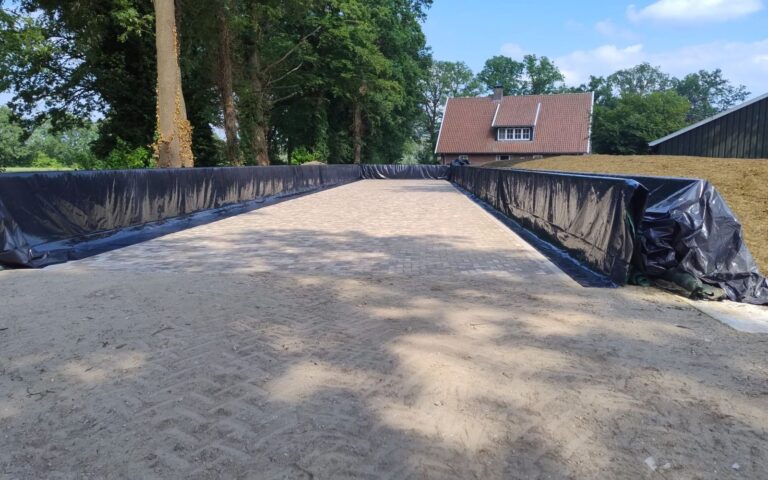 Covering & protectingTips
Prepare your silage pit well before ensiling. Clean and dry the pit and the access route, mow around it and make sure…
Grass · Maize6 min read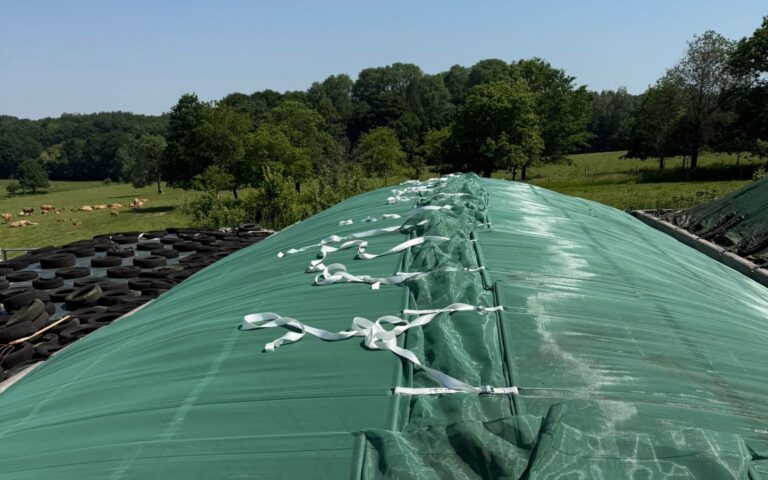 Covering & protectingTips
You prevent pests at your silage pit by taking away food, water and hiding places. Clear up silage residue straight away, mow…
Grass · Maize4 min read