
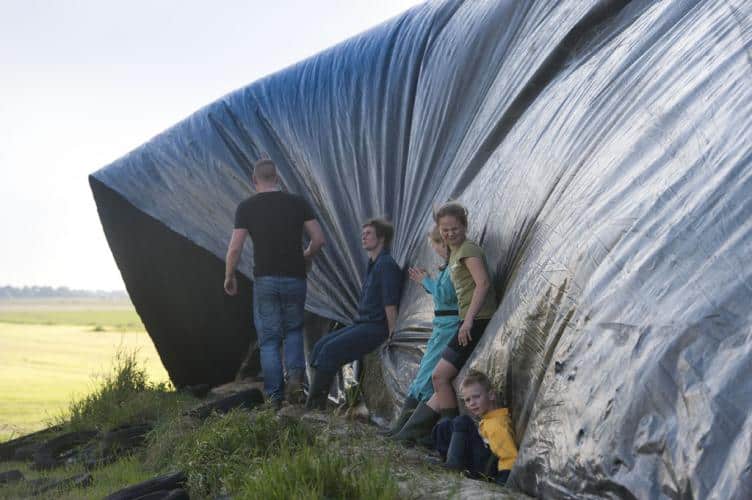
If the plastic blows loose in a storm, put it back quickly and hold it down with weight or covers, starting on the windward side. Then check for tears and air pockets and pull everything tight again. With Silage Safe in strong wind, first secure one cover at the front, middle and back.
Part of the guideCovering a silage pit: step by step to a well-sealed pit
of plastic on every part of the silage: underlay film and two layers of silage plastic
Silage Safewith Silage Safe in strong wind, first secure one cover at the front, one in the middle and one at the back, then the rest starting at the back
Silage Safe, manual in the brochure 2026After a long day of harvesting, covering the pit is already hard work. In strong wind it becomes a nasty job, especially at the maize harvest in autumn. Even in a fresh breeze it is hard to keep the plastic in place without it blowing up again. And once it lies tight, it has to stay that way all winter.
Once the wind gets under a loose edge, it takes hold of the plastic. That happens mainly:
Tyres only give weight in one spot. In between, the plastic can still move.
Yes, if you work quickly and in a controlled way, with one person in charge. Have everything ready beforehand: underlay film, silage plastic, covers or a covering system and a few long sandbags.
Working with Silage Safe? In strong wind, first secure one cover at the front, one in the middle and one at the back. Then lay the rest, starting at the back. As soon as a cover is secured, the plastic underneath is held too. Geert Mulder from Balkbrug (NL): "Wind is much less of a hassle now. As soon as we secure a row of covers, the plastic stays put." See the system on the product information page.
The full step-by-step plan, from preparation to feeding out, is in covering a silage pit: step by step.
The longer the plastic lies loose, the more air reaches the silage. When oxygen gets into the silage, yeasts become active again and the silage starts heating. So act quickly.
If rainwater has run into the silage, see rainwater in silage.
Water tubes, sandbags and long sandbags give weight where they lie, just like tyres. While covering, they help keep the plastic in place on the windward side. But they only give pressure in one spot. In between, the plastic can still move, and like tyres they don't stay in place well on the edges. For silage that has to stay tight all winter, you need pressure across the whole pit, including along the walls.
 From the farm
“The cloths are already prepared, so you just have to lay them over the wall, and when closing, you pull it back over the clamp.”Schep, Lemmer (Netherlands) · read the story
Not sure about your silage?
We are happy to help.
First the flap on the windward side, into the wind. Then the flap from the other side, with the wind. Then the wind can't get under the plastic any more.
Repair it as soon as possible and pull the plastic tight again. Air and water reach the silage through a hole, and that causes heating and mould. Pay extra attention to that spot when feeding out.
Because the silage settles a little more in the first weeks after ensiling. So pull the plastic and the cover tight again after a few weeks.
Updated on 5 November 2026.
 Covering & protectingTips
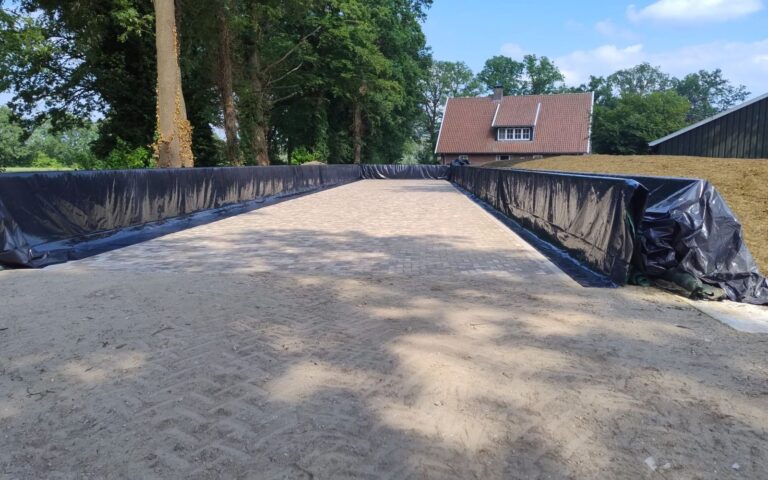
Prepare your silage pit well before ensiling. Clean and dry the pit and the access route, mow around it and make sure…
Grass · Maize6 min read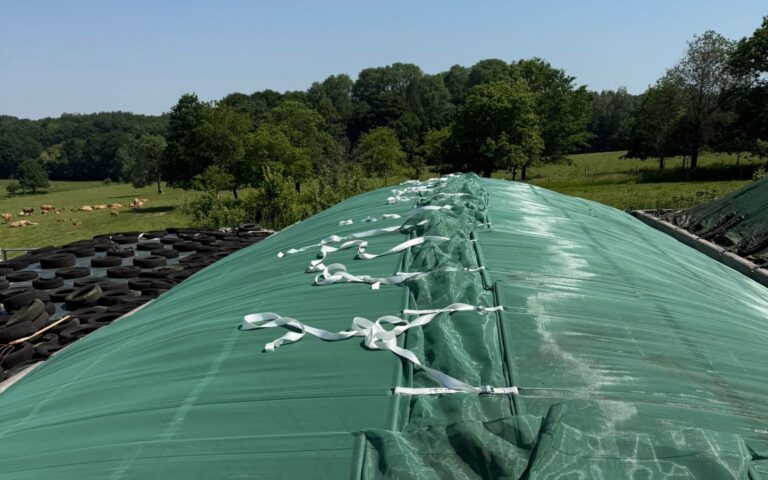 Covering & protectingTips
You prevent pests at your silage pit by taking away food, water and hiding places. Clear up silage residue straight away, mow…
Grass · Maize4 min read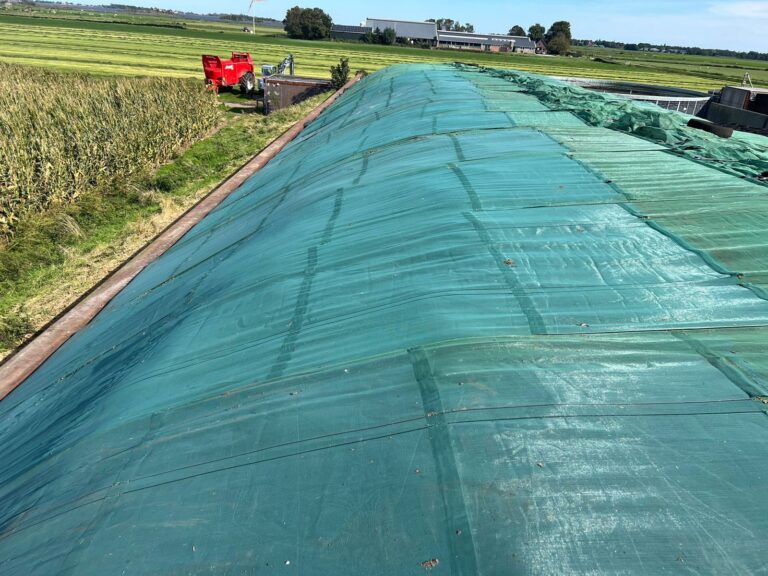 Covering & protectingGuide
Cover maize silage straight after rolling, with underlay film over the full width, a new top sheet and side-wall plastic along the…
Maize5 min read